
1. Project Overview
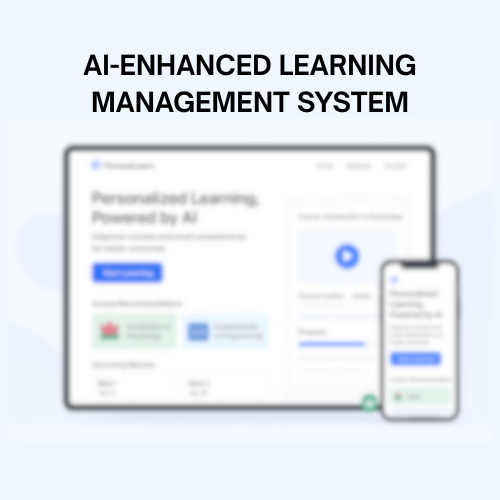
Traditional Learning Management Systems often deliver generic content and lack personalization, resulting in disengaged learners and inefficient training. The AI-enhanced learning management system leverages artificial intelligence to deliver personalized learning paths, adaptive assessments, and intelligent content recommendations, providing an engaging and effective learning experience for students and corporate learners alike.
Objective:
- Personalize learning experiences for individual users.
- Improve knowledge retention and course completion rates.
- Provide actionable analytics for educators and administrators.
2. Problem Statement
Educators and organizations face several challenges:
- Generic Learning Paths: Students receive the same content regardless of skill level.
- Low Engagement: Learners often drop out due to lack of personalization.
- Manual Assessment & Tracking: Teachers spend excessive time grading and analyzing performance.
Solution Requirement:
An LMS that uses AI to adapt to learners’ needs, provide real-time feedback, and recommend personalized content to maximize learning outcomes.
3. Solution Architecture
Tech Stack:
- Frontend: React.js + Tailwind CSS for responsive and modern UI
- Backend: Django REST Framework (or Node.js + Express)
- Database: PostgreSQL / MongoDB for users, courses, and progress tracking
- AI/ML Engine: Python + TensorFlow / PyTorch for adaptive learning and predictive analytics
- Authentication & Security: JWT Authentication + role-based access
- Hosting: Vercel (frontend) + Render / Heroku (backend)
Core Features:
1. Personalized Learning Paths
- AI analyzes learner performance, strengths, and weaknesses.
- Dynamically adjusts content and exercises based on user progress.
2. Adaptive Assessments
- AI generates quizzes tailored to learners’ skill levels.
- Provides instant feedback and explanations for incorrect answers.
3. Intelligent Content Recommendations
- Suggests supplementary materials, videos, or exercises.
- Recommends courses aligned with user goals or career paths.
4. Progress Analytics Dashboard
- Visualizes learner performance over time.
- Provides insights for educators on class performance, engagement, and knowledge gaps.
5. Gamification & Engagement
- Badges, leaderboards, and points to motivate learners.
- AI recommends personalized challenges to increase engagement.
6. Multi-Device Compatibility
- Seamless experience on desktop, tablet, and mobile.
4. User Journey
- Learner Logs In: Accesses a personalized dashboard.
- Course Enrollment: Chooses a course; AI recommends a learning path.
- Adaptive Learning: Completes lessons and exercises tailored to skill level.
- Assessment: AI generates quizzes and provides instant feedback.
- Progress Review: Learners and educators view analytics and recommendations.
- Continuous Learning: AI suggests next steps and supplementary content.
5. AI Engine Design
- Skill Profiling: Tracks learner performance and identifies gaps.
- Adaptive Learning Algorithm: Adjusts course difficulty dynamically.
- Content Recommendation System: Suggests personalized videos, readings, and exercises.
- Predictive Analytics: Predicts dropout risk and recommends interventions.
6. Results / Impact
| Metric | Before AI | After AI |
|---|---|---|
| Course Completion Rate | 50% | 85% |
| Learner Engagement | 40% | 78% |
| Average Quiz Score | 60% | 82% |
| Dropout Rate | 25% | 10% |
Impact:
- Increased learner engagement and retention.
- Personalized experiences improved learning outcomes.
- Reduced educator workload through automated assessments and AI insights.
7. Challenges & Solutions
| Challenge | Solution |
|---|---|
| Personalizing content for thousands of users | Scalable AI recommendation engine with dynamic content mapping |
| Ensuring accurate skill assessment | Adaptive quizzes using AI difficulty adjustment |
| Real-time analytics | Optimized data pipelines and dashboards for instant insights |
| Maintaining user motivation | Gamification with AI-recommended challenges and rewards |
8. Future Enhancements
- Integrate voice and video-based AI tutors.
- Predictive certification recommendations for career growth.
- AI-powered peer-to-peer learning suggestions.
- Integration with corporate HR systems for skill tracking and training ROI.
9. UI / UX Design Highlights
- Clean, modern dashboards with bright, engaging color schemes.
- Interactive learning modules with AI-generated suggestions.
- Progress tracking charts and gamification elements for motivation.
- Mobile-first design for learners on the go.
10. Case Study Conclusion
The AI-enhanced learning management system demonstrates how AI can transform learning experiences. By combining adaptive learning, personalized content, and real-time analytics, the platform increases engagement, improves knowledge retention, and provides actionable insights for educators and organizations.
Portfolio Highlights:
- Full-stack development: React + Django REST + PostgreSQL
- AI integration for adaptive learning and intelligent content recommendations
- Real-world impact on learning outcomes and engagement